


Navigating the world of toddler growth can feel like trying to read a toddler’s mind—confusing and unpredictable. One minute they’re fitting into that adorable outfit, and the next, they’ve outgrown it faster than you can say “growth spurt!” Enter the toddler growth chart, the superhero of parenting tools that helps track your little one’s growth journey with precision and a sprinkle of humor.
Understanding Toddler Growth Charts
Toddler growth charts serve as essential tools for tracking growth patterns in young children. They help caregivers monitor changes in height and weight over time.
Importance of Growth Monitoring
Monitoring growth provides insights into a toddler’s overall health. Regular check-ups often include assessments using growth charts because they highlight developmental milestones. Parents can identify potential issues when they compare a child’s growth with standard percentiles. Familiarity with these trends encourages timely discussions with healthcare providers. Growth charts also offer reassurance, reflecting healthy growth trajectories among peers.
Key Percentiles Explained
Percentiles illustrate how a child’s growth compares to others of the same age. The 50th percentile denotes average growth, indicating that half of the children fall above and half below this benchmark. The 10th and 90th percentiles suggest lower and upper growth extremes, respectively. Understanding these values helps caregivers recognize atypical growth patterns. Percentiles indicate not only weight and height but also other factors, such as body mass index (BMI). These metrics contribute to comprehensive evaluations of a toddler’s development.
Components of a Toddler Growth Chart
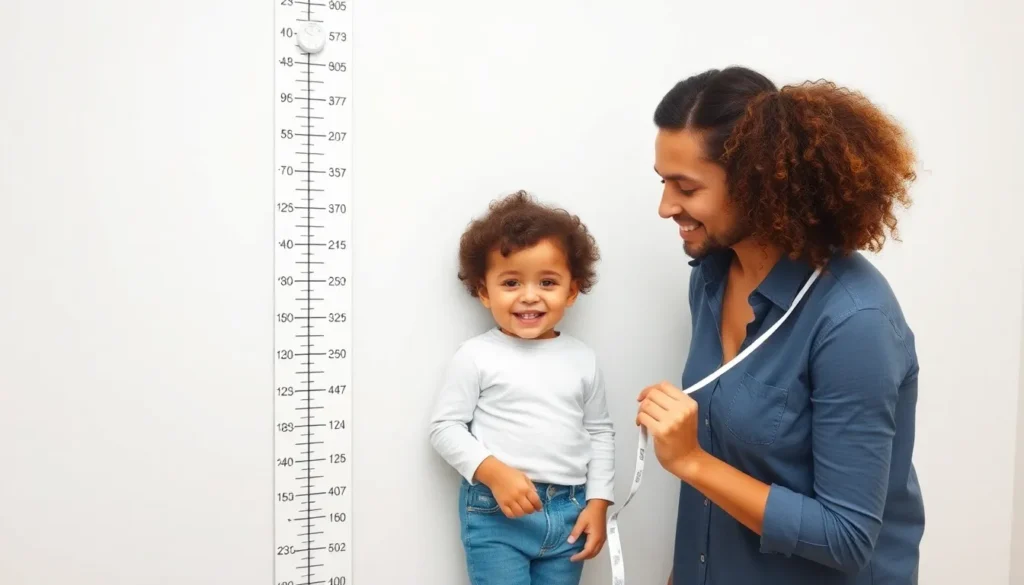
Understanding the components of a toddler growth chart supports effective monitoring of child development. Key measurements make it easier for parents to track growth over time.
Height and Weight Measurements
Height and weight measurements serve as foundational metrics for growth tracking. These figures are typically plotted on a growth chart to visualize a toddler’s progression. Regular updates help parents gauge whether their child is on a healthy growth trajectory. Most pediatricians suggest taking these measurements at well-child visits, usually every six months to a year. Comparing a toddler’s data to standard percentiles allows for immediate identification of any potential growth concerns. This comparison provides insights into whether a child falls within average growth ranges, indicating overall health.
Head Circumference
Head circumference is a crucial indicator of brain development and overall health in toddlers. Measuring this metric typically happens during routine check-ups to ensure proper growth. Though it may seem less emphasized than height or weight, head size can reveal important information about developmental milestones. Tracking head circumference against standard curves helps caregivers identify abnormalities that may require further evaluation. Maintaining consistent measurement intervals also enhances the accuracy of growth assessments, allowing for timely discussions with healthcare providers when necessary.
Interpreting the Growth Chart
Interpreting a toddler growth chart aids in understanding a child’s development. It provides parents with valuable insights into their child’s growth trajectory.
Tracking Growth Over Time
Regularly updating measurements helps track growth over time. Parents often visit healthcare providers every six months to a year for well-child check-ups. Weight and height assessments provide a clearer picture of growth patterns. Percentiles illustrate how a child compares to peers, with the 50th percentile indicating average growth. Consistent tracking reveals whether a child is progressing appropriately or facing potential challenges. As a child grows, recorded changes inform discussions with healthcare providers regarding developmental milestones.
Identifying Growth Patterns
Identifying growth patterns begins with understanding how height and weight measurements relate. Each child’s growth pattern may differ, and that variability is perfectly normal. Parents look for trends on the growth chart, such as steady progress or sudden fluctuations. Noticing consistent growth in the same percentile or transition across percentiles can indicate changes in health or well-being. Pediatricians interpret these patterns, emphasizing the significance of head circumference alongside height and weight for monitoring brain development. Parents equipped with knowledge about these metrics engage proactively with healthcare providers, ensuring that any concerns receive attention.
Factors Influencing Toddler Growth
Understanding the factors influencing toddler growth aids parents in monitoring their child’s development effectively.
Genetics and Nutrition
Genetics plays a significant role in determining growth patterns. A child’s height often reflects parental heights. Additionally, nutrition greatly impacts growth; a well-balanced diet supports healthy development. Nutritional deficiencies can hinder growth and result in long-term consequences. Key nutrients such as vitamins, minerals, and proteins are essential for optimal growth. Furthermore, introducing diverse foods during early years may promote better eating habits later. It’s crucial to maintain awareness of portion sizes and meal frequency to ensure adequate caloric intake. Regular assessments of growth can reveal the effectiveness of a child’s dietary habits.
Health Conditions
Health conditions can significantly affect growth rates in toddlers. Chronic illnesses such as asthma or diabetes may lead to growth delays. Conditions impacting nutrient absorption, like celiac disease, might also influence growth trajectories. Monitoring overall health ensures early detection of any underlying issues. Some medications used to treat health conditions may affect appetite and growth, requiring discussions with healthcare providers. Infections or frequent illnesses can also hinder growth, as they may affect a child’s energy levels and nutrient intake. Regular check-ups help identify and address any health concerns that may arise during early childhood development.
Monitoring a toddler’s growth is vital for ensuring their health and development. Utilizing a toddler growth chart provides parents with a clear visual representation of their child’s growth patterns. By regularly updating measurements and understanding key percentiles, caregivers can identify trends and address any concerns with healthcare providers.
Recognizing the influence of genetics and nutrition further empowers parents to support their child’s growth journey. Engaging in proactive discussions about growth can lead to better health outcomes. Ultimately, staying informed and attentive to a toddler’s growth can foster a healthy foundation for their future.