

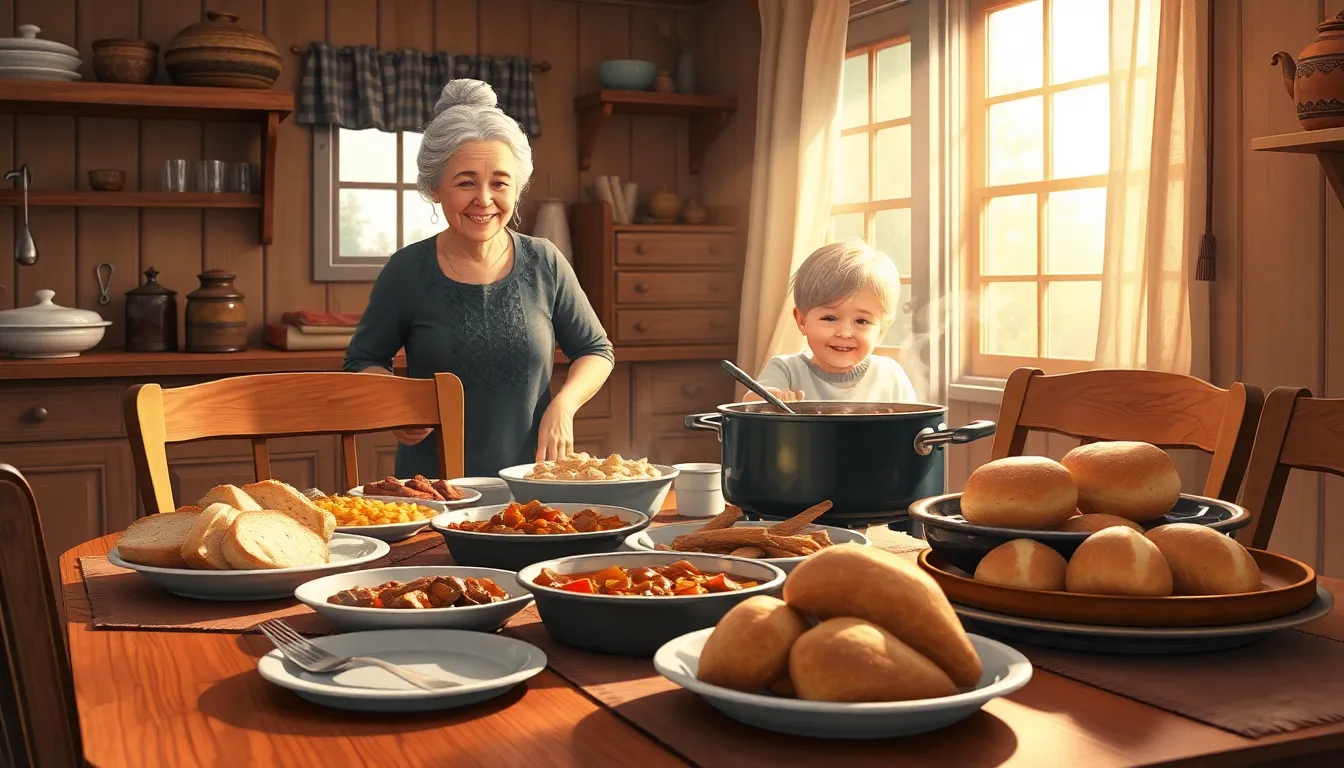
There’s something magical about traditional family recipes that transcends generations. These culinary treasures aren’t just about flavor; they’re stories simmered in nostalgia and love, passed down like heirlooms from one kitchen to another. Imagine the aroma of grandma’s secret sauce wafting through the house, or the laughter shared over a bubbling pot of stew. These recipes hold the power to bring families together, one delicious bite at a time.
Overview of Traditional Family Recipes
Traditional family recipes serve as culinary bridges linking generations. These cherished dishes often embody rich histories and unique stories. Flavors pass through time, with each family adding personal touches that reflect their heritage. Recipes often remain constant, showcasing ingredients and techniques passed down through years, maintaining their importance within family culture.
Memories associated with family recipes hold deep emotional significance. The act of cooking these meals fosters connections, whether it’s the comforting scent of a grandmother’s stew or the shared laughter around holiday gatherings. Recipes contribute to identity, forging a sense of belonging and pride among family members.
Culinary traditions often include regional specialties unique to specific cultures. Families frequently adapt these recipes, ensuring they reflect contemporary tastes while honoring tradition. Seasonal ingredients may shape dishes, enhancing flavors and creating new experiences.
Preserving and sharing traditional recipes remains important for many families. Gathering during holidays or special events often centers on preparing these iconic meals together. Modern technology, such as social media, enables families to document these recipes, allowing them to reach beyond geographical boundaries.
Engagement in food preparation nurtures relationships and strengthens bonds. Each dish tells a story, creating a shared narrative within families. These recipes stand as reminders of love and care, manifesting how food draws people together across generations. Embracing traditional family recipes cultivates not just culinary skills, but cherished memories that resonate through time.
Importance of Preserving Family Recipes

Preserving family recipes holds significant value for many households. These recipes encapsulate cultural traditions, passed down through generations.
Cultural Significance
Cultural identity often relies on traditional recipes, providing a sense of belonging. Unique flavors and cooking methods illustrate a family’s heritage, fostering pride in ancestry. Traditional dishes evoke connections to specific regions or communities, solidifying shared experiences among family members. Families may gather to cook these time-honored meals during important holidays or rituals. Each dish represents a piece of history that shapes identities and preserves cultural narratives.
Building Family Traditions
Cooking together creates lasting memories, serving as a foundation for family traditions. Activities like preparing meals engage all ages, encouraging collaboration and conversation. Sharing stories while cooking strengthens relationships and nurtures bonds. Families often develop their own variations, which infuse individual creativity into recipes, further enhancing the experience. Mealtime becomes a ritual, inviting laughter and connection around the table. This unifying practice transforms recipes into celebrated family legacies.
Popular Traditional Family Recipes
Traditional family recipes often vary by region, showcasing diverse ingredients and cooking methods. These regional variations reflect local customs. For example, Southern families may have their famous fried chicken, while Northeastern traditions might include clam chowder. Each recipe carries distinct flavors influenced by geography and climate. Such variations offer a culinary journey, allowing families to explore their roots through different dishes. Families adapt recipes to highlight local produce as well.
Time-honored techniques play a crucial role in these cherished recipes. Families often employ methods passed down through generations, creating a unique cooking style. Techniques like slow braising, fermenting, or wood-fired cooking enhance the flavor and texture of dishes. These practices also encourage patience and craftsmanship in cooking. Families may gather to demonstrate these skills, passing knowledge to younger generations. Emphasizing these techniques fosters appreciation for culinary artistry and enhances the overall experience of preparing traditional meals.
Tips for Documenting Family Recipes
Documenting family recipes requires thoughtful methods to capture their essence. Engaging family members strengthens the connection to each dish.
Interviewing Family Members
Interviewing family members reveals personal stories behind each recipe. Sharing experiences provides valuable context, enriching the documentation process. Involve older generations, as their memories often hold the richest details. Asking open-ended questions encourages storytelling, which captures the recipe’s significance. Recording these sessions ensures nothing is lost. Not every detail needs formal structure; spontaneity can enhance authenticity. Focus on emotion, as these narratives strengthen the recipe’s familial ties. Collecting quotes and anecdotes adds warmth, transforming ingredients into cherished memories.
Organizing Recipes
Organizing recipes streamlines the process of sharing and preserving culinary traditions. Categorizing by meal types, such as appetizers, main courses, and desserts simplifies access. Creating a digital archive with photos preserves visual memories alongside written instructions. Use labeling techniques to identify family recipes clearly, enhancing usability. Consider adding personal notes or variations to offer context and flexibility. Include preparation and cooking times for a full understanding. Regularly updating this collection helps track evolving family tastes and keeps traditions lively. A clean, coherent system not only facilitates access but enriches the family’s culinary legacy.
Traditional family recipes are more than just a list of ingredients; they embody love, history, and connection. Each dish tells a story that transcends time, linking generations through shared experiences and cherished memories. As families gather around the table, they not only enjoy delicious meals but also strengthen their bonds and celebrate their heritage.
Preserving these recipes ensures that future generations can savor the flavors of their ancestors while continuing to create new memories. By documenting and sharing these culinary treasures, families keep their traditions alive in an ever-changing world. Ultimately, traditional family recipes serve as a delicious reminder of the power of food to unite and nurture the spirit of family.